Used car transfer in Thailand, step by step: papers, fees, insurance
A used car deal moves a lot more money than most secondhand purchases. A paperwork mistake or a skipped inspection can cost tens of thousands of baht. This guide follows the order you should actually work through.
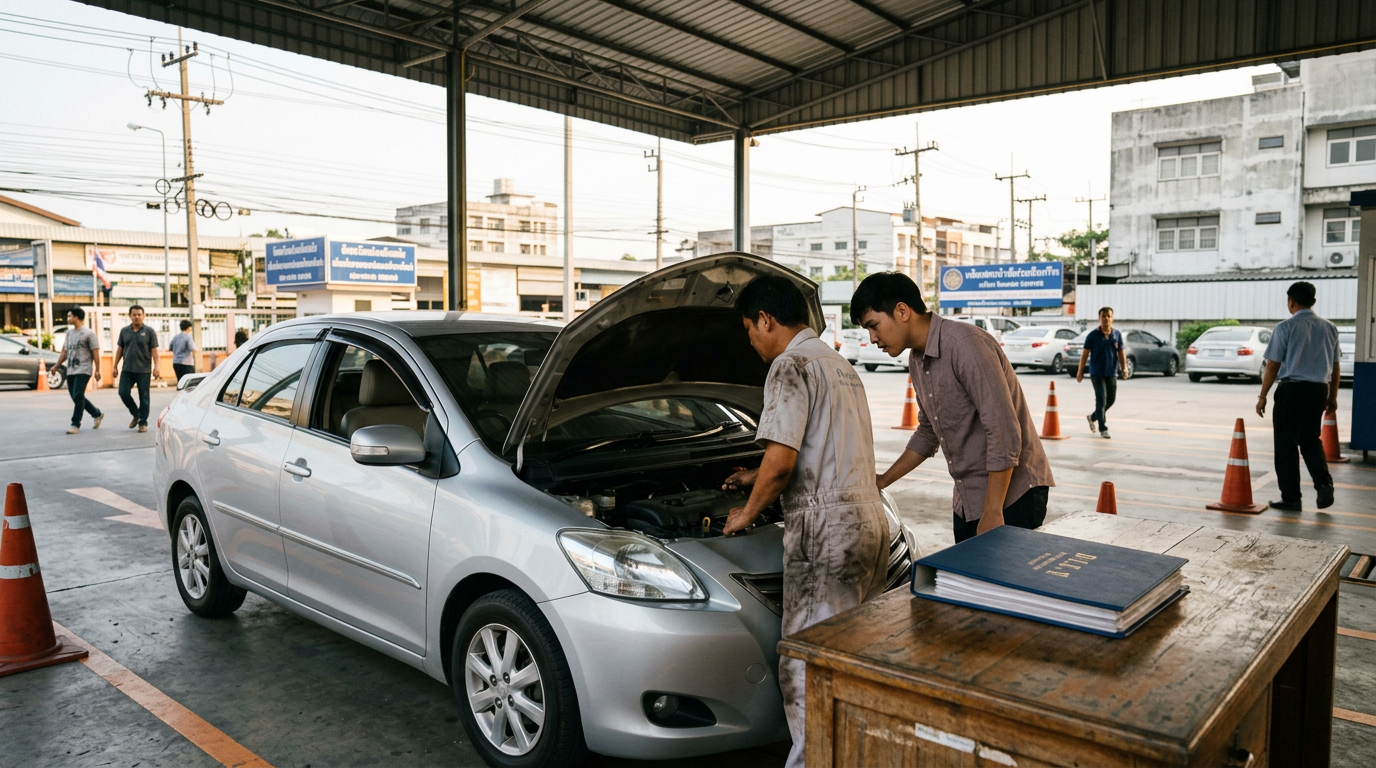
1. Inspect the car before discussing the transfer
Before the paperwork stage, inspect the car thoroughly or take it to an independent inspection service (many large garages offer used-car checks). Look for repaired collision damage, check whether the odometer reading matches the wear on the seats and steering wheel, test drive on both smooth and rough roads, and review the service book if the seller has one.
Ask for the original registration book and confirm the registered owner matches the person negotiating the sale. If the car is still on finance, request the finance company's clearance letter before handing over the final payment.
2. Documents the seller needs
- Original vehicle registration book
- Seller's original ID card, plus a signed copy
- Power of attorney (if the seller cannot attend in person), with a copy of the grantor's ID
- Finance clearance letter (if the car was under an instalment plan)
- Latest tax and compulsory insurance receipts
3. Documents the buyer needs
- Original ID card, plus a copy
- Power of attorney (if the buyer cannot attend in person)
- If financing the purchase, the hire-purchase agreement from the new finance company
4. Book an appointment and visit the DLT office
Many transport offices now allow booking online in advance through the Department of Land Transport's website or app. Ideally both buyer and seller attend together with the car, so an officer can verify the chassis and engine numbers at the inspection point before the ownership transfer is processed at the counter.
5. Transfer fees and outstanding tax
The ownership transfer fee is roughly ฿100-300, plus small application and new plate fees if the plate changes — usually a few hundred baht total. If annual tax is overdue, back tax plus a penalty must be paid before the transfer goes through, so check the tax status in advance and factor it into your negotiated price.
6. The tax disc and re-registration after transfer
Once the transfer is complete, the buyer receives a registration book in their own name and should check the tax disc on the windscreen is not close to expiring. Cars over 7 years old must pass a private inspection centre (ตรอ.) check every year before the tax can be renewed.
7. Switch the insurance policy to the buyer's name
Voluntary insurance (Class 1-3) is tied to the vehicle and the previous owner. Contact the insurer to change the named insured immediately after the transfer, or take out a new policy in your own name. If an accident happens before the name is updated, claims can be delayed or disputed over who has an insurable interest.
On-site used-car inspection checklist
- Match the chassis and engine numbers against the registration book (เล่มทะเบียน) yourself.
- Ask for a cold start and watch exhaust smoke; white or blue smoke is a warning sign.
- Run the air conditioning on full for at least ten minutes; AC repairs are a major cost in Thailand.
- Mud or rust on the boot floor, seat rails or seat-belt ends suggests flood damage.
- Check the tyre production date (four-digit DOT code) and brake-pad thickness.
- If possible, have a workshop run an OBD scan for hidden warning codes.
Checking finance and seizure status
The biggest risk in Thai used-car trading is a car with outstanding finance (ไฟแนนซ์). The lender keeps the original registration book, so sellers often show only a copy. Without the original, check the balance with the lender together and settle the balance and the transfer at the same time.
Checking the vehicle at the Department of Land Transport (DLT), or visiting DLT with the seller and filing the transfer the same day, avoids most seizure and ownership problems. Avoid deals that swap car and money first with 'I'll transfer it later'.
Transfer costs and documents
- Seller: original registration book, copy of ID, signed transfer form and power of attorney if not attending.
- Buyer: ID (foreigners need a passport and residence certificate) and proof of address.
- Both: check compulsory insurance (พ.ร.บ.) and road tax status; settle arrears before transfer.
- Transfer fees depend on the vehicle's assessed value; confirm at the DLT counter or official guidance beforehand.
What to confirm during the transfer
- Can foreigners buy a used car? Yes. A residence certificate from Immigration or an embassy is often required.
- How much deposit is reasonable? Pay only after checking the original registration book and the car, and record the amount and refund terms in writing.
- Is buying from a dealer safer? Warranties and paperwork help, but check the original documents just the same.
Continue with related areas and categories
Read in another language
Related guides
- Safe secondhand trading in Thailand: scams, meeting places, checks, payment and what to do if it goes wrong
- How to sell secondhand items fast on Near Dee
- How to price secondhand items sensibly in Thailand
- How to photograph your listings with just a phone
- Chat and negotiation etiquette in Thai secondhand trading