How to pay safely for secondhand deals in Thailand: cash, PromptPay and bank transfer
The payment method you choose carries almost as much risk as the item itself. Here is how cash, PromptPay and bank transfer actually work in Thailand's secondhand market, and how to make sure money has really arrived before you hand anything over.
Cash: the safest option for in-person deals
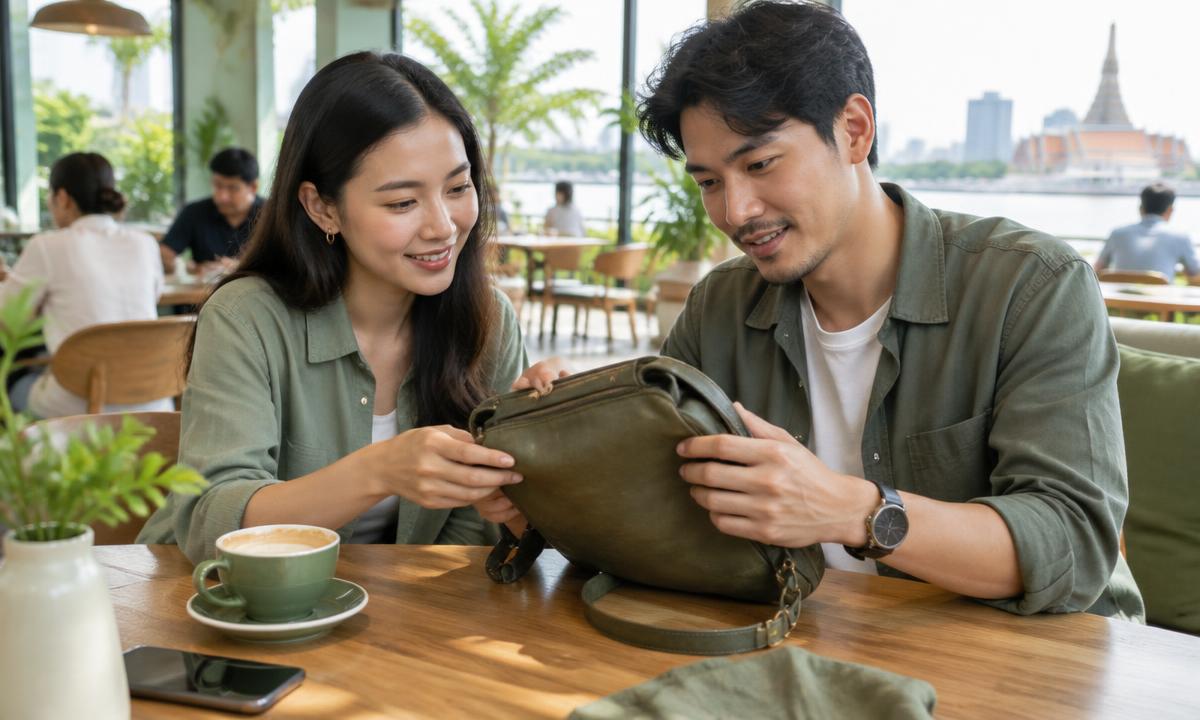
Cash remains the safest method for face-to-face trades because there is no intermediate step that can be faked. Inspect the item first, count the full amount together, then hand it over. For anything above a few thousand baht, meet somewhere with CCTV such as a bank branch or a condo lobby, and consider a counterfeit-detection pen for large amounts.
The downside is that cash does not work for remote trades that require shipping, and carrying large sums exposes you to personal safety risk on the way to and from a meeting.
PromptPay: fast and the easiest to verify
PromptPay links a bank account to a national ID number or phone number. Scanning a QR code transfers money instantly with no fee between individuals. Its biggest advantage is that the recipient's name always appears on screen before you confirm — always check that the name matches the seller you have been chatting with.
Sellers should ask buyers to scan a QR code generated live from their own banking app rather than send a saved image, since edited QR images that redirect payment to a different account are a real scam pattern.
Bank account transfer
A direct bank transfer works similarly to PromptPay and is often used for larger amounts or when both parties are on different banks in some apps. Ask for the account number and name as text inside the marketplace app's chat rather than on a channel where messages can be deleted, so you keep full evidence if you ever need to file a report.
How to confirm money has really arrived, not a fake slip
- Never trust a screenshot of a transfer slip sent in chat. Open your own banking app and check the incoming balance directly.
- Fake slips are easy to produce with editing apps — the amount, time and sender name can all be altered. Don't rely on a visual check alone.
- Many Thai banks offer a slip verification feature in-app or online. Use it before releasing goods for any high-value transaction.
- Wait until the money actually shows in your account before shipping. Never ship the moment you see a slip image.
Deposits: when and how much
Deposits make sense when an item needs to be held for later pickup, or for remote sales where both sides carry some risk. Keep the deposit small — around 10-20% of the price, not the full amount — and only send it to an account whose name matches the seller you are chatting with.
Save screenshots of the agreed terms, the pickup date, and the transfer slip. If the other party backs out, you'll have complete evidence to report in the app or to the police.
Why cash-on-delivery is riskier than it looks
Cash-on-delivery through a courier feels safe because you pay only on receipt, but in practice the buyer cannot inspect the item before handing money to the courier. By the time you discover the item doesn't match the listing or is damaged, payment is already made. Courier claims only cover items lost or damaged in transit, not items that don't match what was agreed.
Sellers carry risk too: buyers sometimes refuse to accept the COD parcel, leaving the seller to cover the return shipping cost. A safer approach is to transfer payment upfront once both sides are confident in the details, or meet in person to inspect before paying.
Choosing the right method for the situation
For local meetups, use cash or a live PromptPay transfer, verified before you part ways — this carries the least risk. For remote trades requiring shipping, build trust through the seller's history and reviews first, then transfer in full or split it as a deposit plus balance, keeping evidence at every step until the transaction is complete.
Read in another language
Related guides
- Buying secondhand in Bangkok and its suburbs: neighbourhoods, handover spots, and market prices
- Bangkok's secondhand and flea markets: Chatuchak, the train markets, Khlong Thom, and secondhand IT
- Moving apartments in Bangkok: timing, move-in/out rules, and what to sell before you go
- Thailand's seasonal calendar for secondhand demand: Songkran, rainy season, school terms, and year-end
- Living and trading secondhand in Chiang Mai: Nimman, Old City, Hang Dong, San Sai